The Different Types of Memorial Jewelry — And What Each One Means
Memorial jewelry isn’t one thing. It’s a whole language. Every shape, metal, and method carries its own kind of meaning. Some pieces protect something fragile. Some hold ashes. Some don’t hold anything physical at all, they just carry memory in the design and way they were made.
Here’s a clear, honest breakdown of the most common types of memorial jewelry, and what each form can hold for you.
Memorial Rings
A ring is the piece people reach for most. It becomes part of your body, something you touch without thinking. And it’s a piece that you will see conciously or unconciously throughout the day.
Memorial rings work well for:
ashes
hair
fur
dried flowers
soil from a meaningful place
or nothing physical, just symbolism
They’re also the easiest to wear daily. They take on your life through scratches, warmth, movement until the piece feels lived-in, not new.
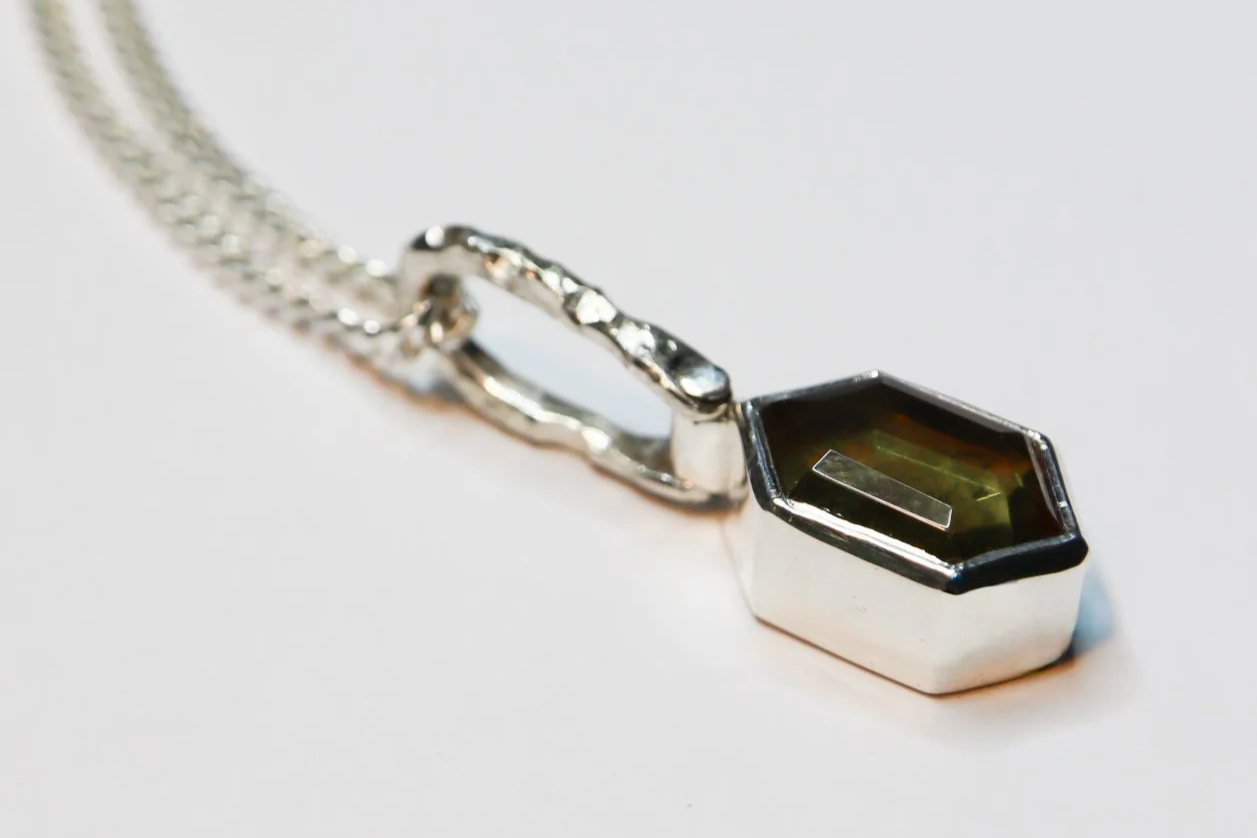
Memorial Necklaces
Pendants keep the memory close to the chest. People choose them when they want something that feels private, protective and close to the heart.
The shape dictates how subtle or bold it appears. A heavy pendant can feel grounding. A small one can feel almost secret.
Cremation Ashes Jewelry
Cremation jewelry doesn’t have to be visible to anyone but you. It can be a quiet place for the ashes to rest. But visibility is an option if seeing the material brings comfort. Both approaches are valid, and both can be deeply personal.
Ashes can be held in two main ways:
A sealed, invisible chamber
The ashes sit inside a closed form, protected and completely hidden. Only you know they’re there.Placed beneath a transparent stone
If you want to see the sentimental material, the ashes can be set underneath a clear gemstone. This keeps the ashes visible but protected, and if you give the piece a little shake you can see the ashes shifting underneath.
I set all stones using traditional techniques — never resin. Resin yellows over time, traps air, and breaks down. I don’t use it, and I never will.
In my work, the ashes stay untouched, unaltered, and fully protected beneath the stone or sealed within the form.
Handmade ashes jewelry feels different because it respects the weight of what it carries; quietly, honestly, and with intention.
Jewelry That Holds Hair or Fur
Hair and fur carry a different kind of softness in memorial jewelry. They hold texture, color, and a physical echo of the human or animal who matters to you. This form of memorial jewelry has a long history; in the Victorian era, hair jewelry was a way to stay connected to someone during life and after death. It was a way to make intimacy wearable.
That tradition continues today.
Hair or fur can be enclosed beneath the gemstone, protected and visible.
This type of memorial jewelry is especially meaningful for pet memorials:
dogs, cats, horses, really any animal whose presence shaped or shapes your daily rhythm.
A small lock of fur can hold more memory than most objects ever will.
But it isn’t only for loss.
Some people choose to create a piece with hair or fur from someone still very much alive maybe thats a partner, a child, a beloved pet who can’t always come along. It becomes a way of keeping them close during travel, work, or separation. It’s a small tether to each other.
Hair and fur pieces don’t need to shout their meaning. Their depth sits in their quietness, the closeness, the history, the softness held inside the metal.
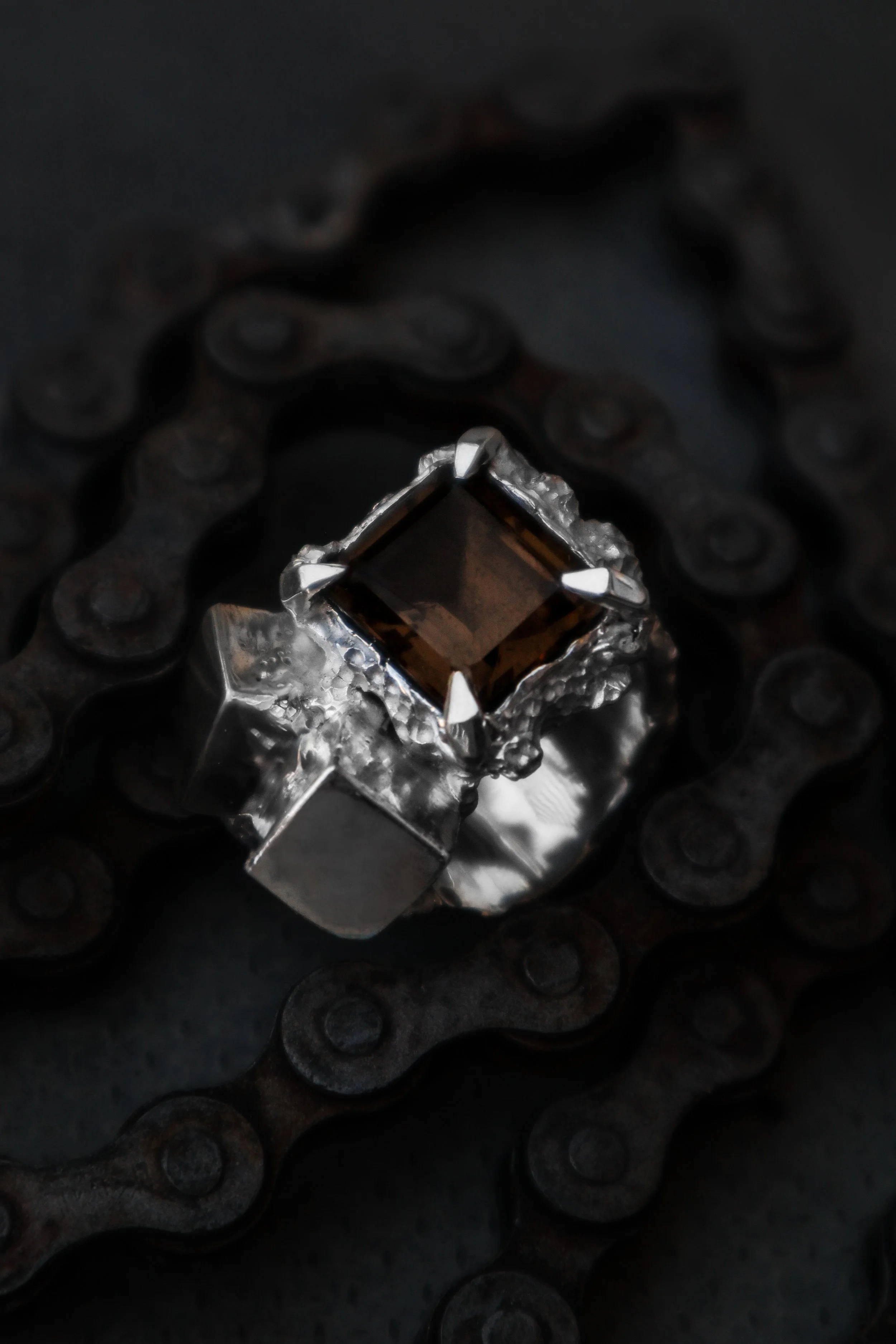
Symbolic Memorial Jewelry
Not every memorial piece needs to hold ashes, hair, or anything physical. Sometimes the metal itself becomes the memorial. These are symbolic pieces, and they’ve existed much longer than people realise.
In Victorian mourning jewelry, symbolism was everything.
People wore motifs like:
forget‑me‑nots for remembrance
willow branches for grief
anchors for steadiness
knots for unbroken connection
serpents as a symbol of eternity
urns, wings, hands, and eyes as metaphors for protection and watchfulness
Materials carried meaning too.
Jet, vulcanite, bog oak, onyx, and woven hair were used because they felt like grief — dark, matte, grounded, intentional.
That tradition still exists, just stripped back. Modern symbolic memorial jewelry doesn’t need elaborate motifs to speak loudly. It can be as simple as a shape, a texture, a weight.
In a lot of my memorial work symbolic pieces often take the form of:
raw, textured metal that mirrors the unevenness of loss
geometric shapes tied to a memory or relationship
engraving a date, place, or phrase no one else needs to decode
custom forms that reference something specific to the person
metal choices that carry emotional tone (oxidized silver, matte gold surfaces)
Sometimes a symbolic piece is chosen instead of ashes jewelry, maybe when you don’t have physical material to include, or when the relationship was complicated, or when you want something that represents the person without holding anything literal.
And sometimes the symbolism is for someone still alive, a partner’s birthstone, a shape tied to a child, a symbol connected to your pet. A way of carrying meaning without turning it into a keepsake of loss.
Materials Matter More Than People Think
Here is the refined section with your practical voice, no invented emotions, and a clear statement about never using resin — plus the technical reasons why.
It stays SEO‑clean for “memorial jewelry materials,” “ashes jewelry,” “gold memorial jewelry,” etc.
Materials Matter More Than People Think
The materials used in memorial jewelry determine how strong the piece is, how it ages, and what kinds of settings are possible. That matters even more when the piece holds something irreplaceable.
I work only in precious metals:
sterling silver
8k gold
14k gold
18k gold
These metals are durable enough for daily wear and stable enough for traditional stone‑setting techniques. They allow me to build sealed chambers or to set transparent stones securely.
The stones I use are cut in shapes that can be set with traditional, long‑lasting methods. This keeps the internal contents protected and untouched.
I never use resin in memorial jewelry.
Resin yellows, becomes brittle, traps air, can crack under pressure, and breaks down with exposure to light and heat. It also fuses permanently with the cremation material, meaning the ashes are altered and cannot be recovered. None of that is acceptable for a piece meant to last decades.
Working in metal means the ashes or hair remain completely intact and can be placed beneath a stone or inside a sealed chamber without ever being mixed, suspended, or encased in something else.
If you want to bring your own materials, I can usually incorporate them:
old gold that can be melted and reused
heirloom gemstones
small personal elements that matter to you
This creates continuity, it’s a new piece built from something already carrying its own history.
Using the right materials is about durability, integrity, and protecting what the piece holds.
Choosing the Right Memorial Piece
It’s not about what’s “right” in general. It’s about what feels right to you.
Ask yourself:
Do I want this piece to be daily-wear or occasional?
Do I want the contents to be visible, hidden, or nonexistent?
Do I want something that looks traditional or unconventional?
Do I want it to feel delicate or strong?
Do I want something that blends in, or something that stands out?
The right memorial piece sits quietly at the intersection of memory and identity.